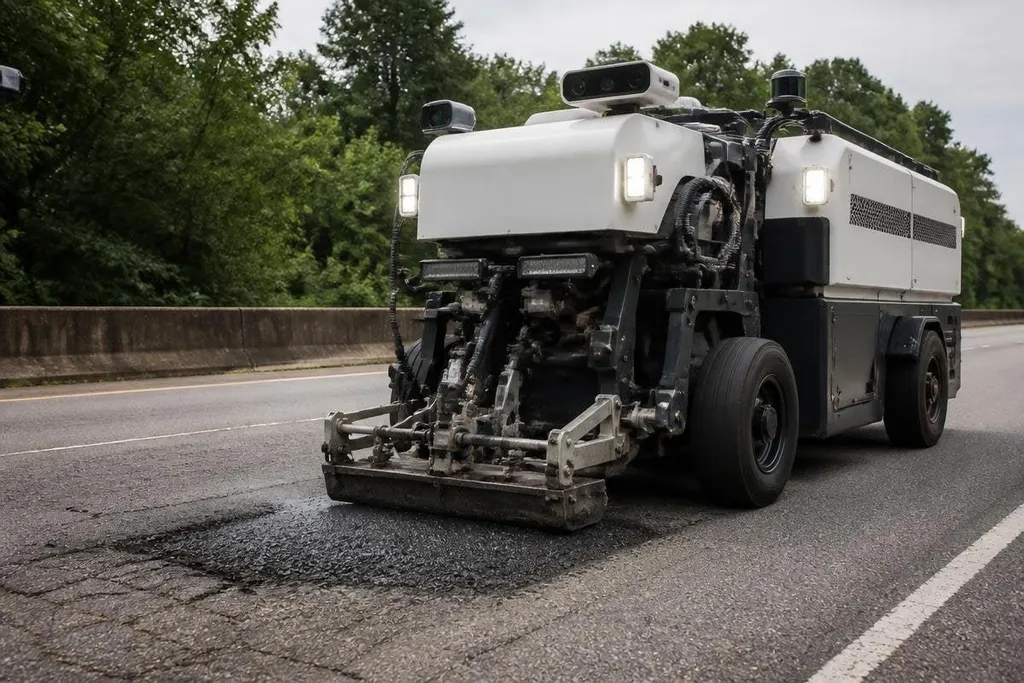
A road robot could find a pothole, remove loose material, and place a patch without a crew standing beside it. Fully automatic road repair is still out of reach because each site differs, and the repair has to hold under traffic, rain, heat, and frost.
Quick read:
- Cameras and LiDAR can help find cracks, potholes, and damaged road edges.
- Repair still needs decisions about depth, material, weather, and traffic safety.
- The first useful systems will likely inspect roads and support crews rather than replace them.
Finding damage is the easier part
Inspection robots can use cameras to record the surface and LiDAR to measure its shape. LiDAR sends out laser pulses and builds a 3D view, so software can compare a shallow crack with a hole that needs cutting.
That work fits a robot well. The vehicle can move along a fixed route, mark damage on a map, and send the location to a road crew. It can also return to the same section after a repair and check whether the surface has changed.
The hard part starts when the robot must decide what to do. A dark patch may be fresh asphalt, oil, or a wet area.
A crack may sit above a deeper failure in the road base. A camera can spot the surface; it can't inspect every layer below it.
Repair needs more than a patch
A pothole repair often starts with cleaning out loose material. The damaged area may need cutting into a regular shape before workers add asphalt or another repair material. The surface then needs compacting so traffic doesn't push the patch back out.
Each step needs feedback. The robot has to control a cutting tool, place the right amount of material, and check the finished height against the surrounding road. A patch that sits too high can affect vehicles. One that sits too low can collect water.
Weather adds another limit. Asphalt behaves differently when it is cold, wet, or hot. A robot working from a fixed recipe would make poor choices when the road, material, or forecast changes. A useful system needs sensors, stored work rules, and a person who can take over when the readings don't make sense.
Where automation fits first
Road agencies are more likely to use robots for repeatable work before handing over full repair decisions. A machine could inspect a route overnight, mark damage, and guide a crew to the locations that need attention.
A second step would pair the inspection system with a repair tool. The robot might prepare small defects while a worker checks the material and approves the final pass. That setup cuts time near live traffic without asking software to judge every hidden road failure.
A filled pothole proves very little until traffic, rain, and freeze-thaw cycles have tested it. Robot 24 can point to the road type, repair material, test date, and follow-up inspection behind a repair claim. Agencies need the same result across many surfaces, not one clean patch in a video.
The useful test is repeatability. Can the system find the same type of damage across many road surfaces? Can it work beside traffic without blocking a lane for longer than a crew? Can an agency service the robot and get replacement tools when a cutter, pump, or sensor fails?
What still needs a human decision
Full autonomy needs clear answers before a city should rely on it. A road agency should check:
- Damage range: Which cracks, holes, and edge failures can the robot handle?
- Repair method: Does it cut, clean, fill, compact, or only mark the work?
- Material rules: Can the system adjust to the asphalt or patch material in use?
- Safety control: Who stops the robot when traffic, workers, or weather change?
- Proof of repair: What inspection shows that the patch is level and sound?
These checks also set the business case. If a robot only finds damage, the agency still needs a repair crew. If it repairs small defects but needs a traffic-control team at every site, the savings may be limited.
I'd buy the inspection system before the fully autonomous repair machine. Surface mapping is a clear task with a clear output; deciding how to rebuild a damaged road still depends on conditions a robot may not see.
The next useful road robot will probably work as a measured assistant: it finds the defect, prepares the site, records the repair, and leaves the final call to a trained operator.